Showing posts with label Exhibitions. Show all posts

Thursday, October 22, 2020

Hypersphaerae vandoesburg


Hypersphaerae vandoesburg

Colored Diamond Pattern Superball


This style of ball is named after the Dutch artist Theo van Doesburg who was, along with Piet Mondrian, one of the founders of the De Stijl movement that was concerned with abstraction, simplicity and a new kind of applied art.  

(Source: https://www.artsalonholland.nl/grote-meesters-kunstgeschiedenis/theo-van-doesburg.)  

H vandoesburg display geometric and rectilinear "blocks" of rpimary and secondary colors in a solid color field—the base color varying from the blocks but represented as such in alternate samples; I.e, with a green base field, the green block would not appear.  The design is made within a sheet of rubber and then molded around a core in the construction process.  The surface is most often matte and textured but can be found with smooth, shiny skins as well.  The balls are dense and less dynamic than typical styles and can oxidize and dry out with age. (Photo courtesy of Headwater Media.)


Theo van Doesburg, Composition VIII (the cow), 
ca.1918, oil on canvas, 38 x 64 cm, 
Museum of Modern Art, New York, USA

Hypersphaerae vandoesburg
2014

Specimen box created for, Bounce!, at the Children's Museum of Pittsburgh (2014/15).

Materials: Salvaged frame, linen, foam-core, wood, metal nameplate, hardware, and contemporary balls.

Photo courtesy of Headwater Media,
©2020 Henry J. Simonds

Tuesday, October 20, 2020

Hypersphaerae anuli

Hypersphaera anuli
Ringed Superball

Although many companies selling this bouncy ball or similar designs often call this a "striped" ball.  At the I.S.S., H anuli has been classified as "ringed," because the lines/stripes run longitudinally parallel to the equatorial center line or axis where the two halves are joined in the mold.  Additionally, two pink dots sit at each pole of the sphere, further emphasizing its orientation and, thus, influencing the categorization.  

This ball features concentric rings of primary and secondary colors (green, red, and blue) embedded in a regularly spaced, loose pattern within a dominant skin of smooth, matte yellow rubber with pink at its poles/center circles.  This is a particularly dense and hard style of ball due to its composition and construction.  The matte finish allows for oxidization and aging of the surface, which dulls the vibrance and can take on dirt and oils.  The variations of color and pattern beyond this base yellow color ball have not yet been accepted in the anuli class and will be considered in the future.  (Photo courtesy of Headwater Media.)

Hypersphaera anuli
2014

An assemblage of balls created for the collaborative exhibition, Bounce!, at the Children's Museum of Pittsburgh

Mounted on salvaged wood with home-made black-walnut stain and metal nameplate. 

Photo courtesy of Headwater Media,
©2020 Henry J. Simonds

Monday, October 19, 2020

Hypersphaerae iridis

Hypersphaerae iridis

Bornite Superball


Bornite, also known as "peacock ore," is a copper iron sulfide mineral ore found in "mafic igneous rocks, in contact metamorphic skarn deposits, in pegmatites, in medium- to high-temperature hydrothermal deposits, and in sedimentary cupriferous shales."  Its natural color is red, brown, or bronze, which quickly tarnishes to metallic, iridescent purple and blue with oxidization. 

(Source: https://geologyscience.com/minerals/bornite/.)


H iridis mimics the range of colors of bornite in both its natural and oxidized states and the texture of the ore's variegated surface.  The balls are opaque but show a luminescence due to the "metallic" core and the smooth, outer skin.  The balls derive their color from pigmenting within the interface of the outer skin and the core surface coating.  They are heavier and more dense than other sphaerae due to the nature of the core material but are prone to cracking of the outer layer and tend to dry out with time due to exposure. (Photo Courtesy of Lenore M. Edman. www.evilmadscientist.com) (Below: 2 bornite mineral samples.)


Hypersphaerae iridis

2013


A hand-crafted specimen box by Henry J. Simonds, created for the exhibition, Super•Ball, held at The Mine Factory in Pittsburgh, Pa, in December 2013.


Materials: contemporary balls, hardware, found frame, plexiglass, paint, salvaged wood, and engraved plate.


Photo: ©2013 Henry J. Simonds/Headwater Media


Friday, September 6, 2019

Our balls are going global!


http://sites.middlebury.edu/announcements/2019/06/25/institute-displays-global-impact-piece-by-henry-simonds/

In a long planned effort, this piece, Global Impact—which is a portfolio of Sphaeralogical motion capture images—is finally being distributed around the world.

Very excited and grateful to Middlebury College for this acquisition.

Henry J. Simonds, Chief Sphaeralogist

Wednesday, August 26, 2015

Middlebury College - Installation pro tempore of GLOBAL IMPACT


Temporary and ONLY installation of GLOBAL IMPACT at Middlebury College


These 21 photographs are to be distributed to 21 separate locations across the Middlebury institutional footprint to exist as a single, globe-encompassing work of art.  


Wednesday, May 6, 2015

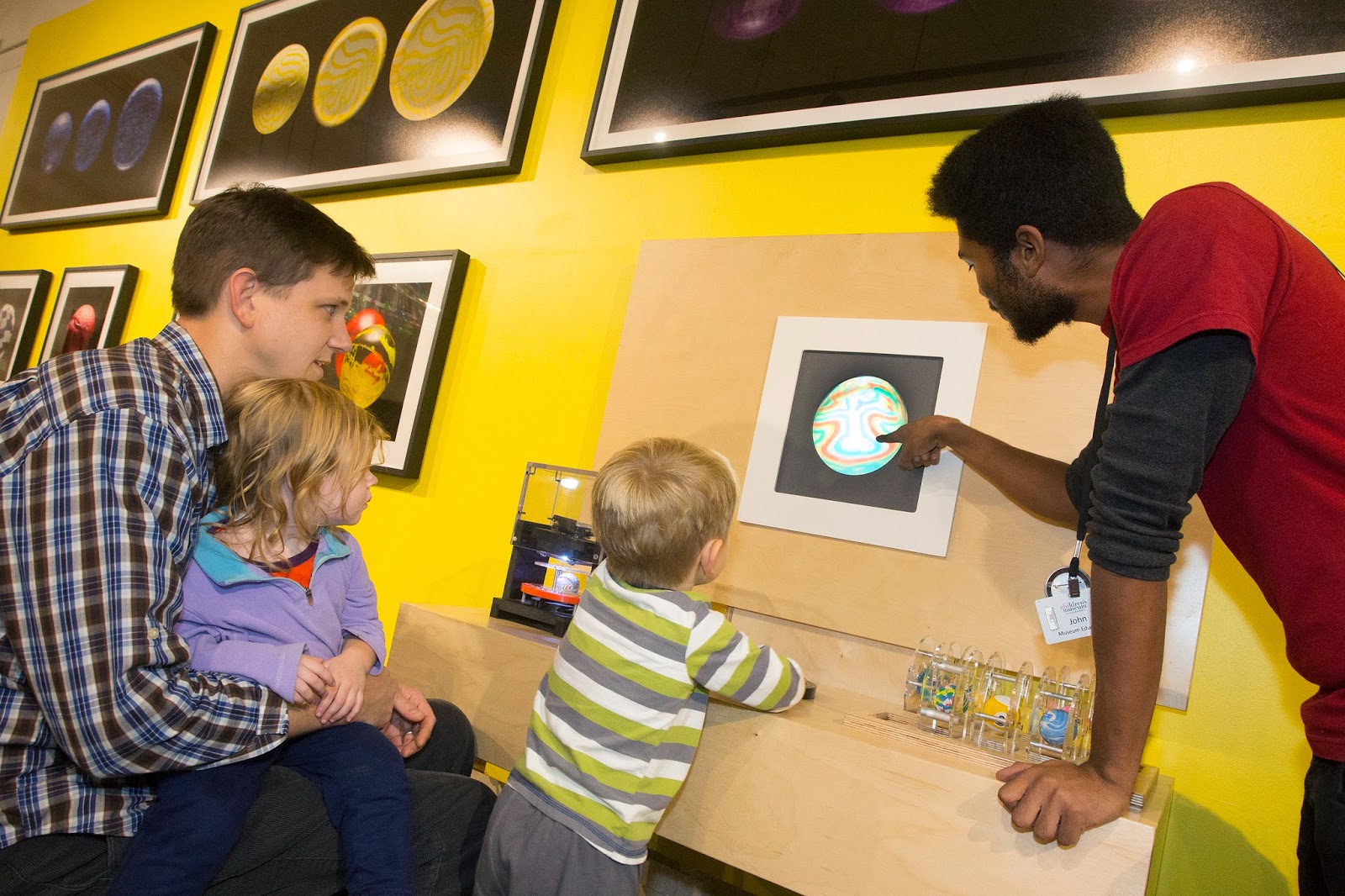
BOUNCE! - Making of the Interactives

The resident design gurus at the Children's Museum show prototypes of the interactives that will be featured in the show.

Ball Wave:


Ball-O-Scope:


Wack-A-Ball:


Tuesday, April 28, 2015

BOUNCE!: Super-Ball Chandelier


Chief Sphaeralogist, Henry J. Simonds,  was very pleased to collaborate with the Children's Museum of Pittsburgh's staff designer, Lisa Carvajal, on a one of a kind chandelier.  The 3-tiered piece was installed in the gallery space during BOUNCE! and will be permanently installed in the nursery area of the Museum.  Here are some design renderings and the finished product for your enjoyment.

Commissions of new chandeliers will be considered.

Best,

The Founders

------

Finished Concept Drawing

Early 3D Concept Rendering
Early Concept Rendering Level
HJS Design Concept Sketch
Final 3D Design Rendering

  
Concept Rendering


Gallery view

Finished Piece

Wednesday, December 3, 2014

Scenes from BOUNCE! at the Children's Museum of Pittsburgh


Hey Folks,

Here are some scenes from the exhibition.  Photos by Larry Rippel are from the opening celebration.  

The BOUNCE! Video was made by the folks at the CMP.

Enjoy!

 - The Founders